
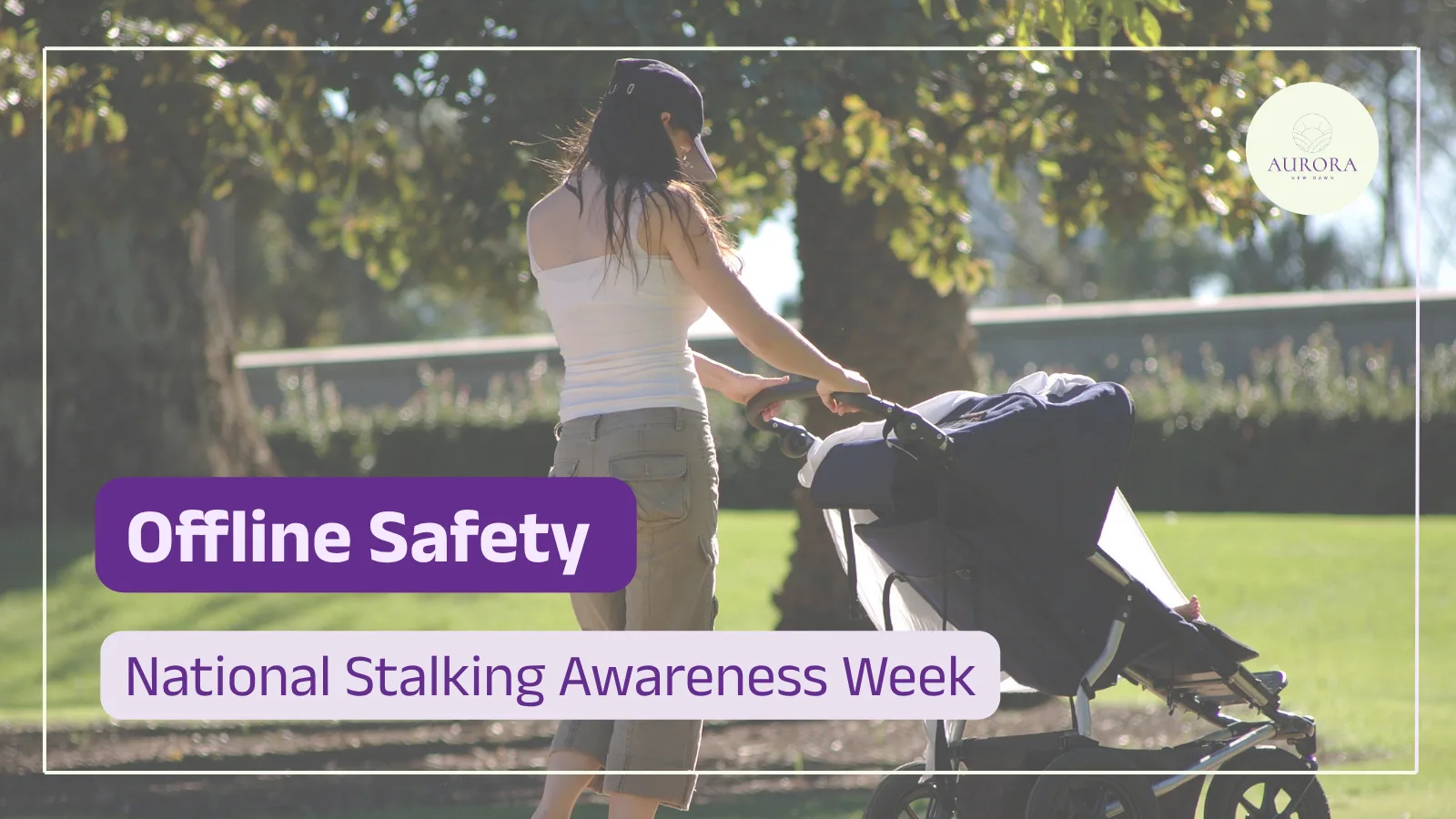
When you’re offline you still need to consider things that can prevent stalking and help keep you safe.
Changing daily habits can help.
Changing your routine, times, and locations so you’re not predictable to anyone else.
For example if you always go to the same gym class, swim sessions maybe try to change this up so it’s not predictable to others.
When walking on your own try to stay in a well-lit public area. Change the route up so you’re not always doing the same route.
Sometimes times and routes can be unavoidable due to work commitments so try check in with friends and family, share your locations with them so they are aware of where you are.
Staying alert in public will help you, try to not have music on too loud and be aware of your surroundings.
If you feel like someone is following you, go to a public area, somewhere busy with shops, cafes.
If you do notice you’re being stalked, keep a log of incidents, including times, dates, locations, what has happened, and how it has impacted you. Tell people you trust and report to 101 or 999 in an emergency. Do not engage with them.
Always trusts your instincts, if you feel unsure about someone or something feels off, make sure you stay or get in a safe place. Tell someone either around you or a friend or family on your phone. It’s always better to be cautious than dismiss a risk.
Use target hardening measures in the home to improve security. Things like a video door bell, CCTV cameras, and security alarms can help to improve safety and capture evidence.